
AVS Aeroskin vs Bug Deflector II – Which Hood Shield Fits Your Truck?
Choosing between two of our most popular hood shields — the Aeroskin and the Bug Deflector II — comes down to how you use your truck and what kind of profile you prefer. Both models protect your paint from chips, bugs, and road debris, but they achieve that goal with different mounting styles and visual approaches.
This AVS hood shield comparison walks through the key differences in design, installation, and performance so you can pick the one that matches your needs. We’ll cover how each shield attaches, what kind of look it delivers, and which scenarios favor one over the other.

Design Philosophy: Low-Profile vs Traditional Stand-Up
The Aeroskin sits flush against the hood contour, following the body line with a subtle wraparound design that barely rises above the surface. It delivers protection without adding visual bulk, and the low profile means less wind interaction at highway speed.
The Bug Deflector II takes the traditional stand-up approach, extending upward from the hood edge to redirect airflow over the windshield. That taller stance creates a more aggressive appearance and moves debris higher off the glass. Both styles work, but your choice depends on whether you prioritize a sleek factory look or a bold aftermarket presence.
If low-profile aerodynamics and reduced wind noise matter to you, our detailed breakdown of how the Aeroskin reduces wind noise explains the engineering behind the flush-mount design.
Mounting Method and Installation Time
Aeroskin shields use 3M automotive-grade adhesive tape that bonds directly to the hood surface. No drilling, no hardware, no exposed fasteners. You clean the mounting area, peel the backing, press the shield into place, and you’re done in under twenty minutes.
Bug Deflector II models attach with a combination of adhesive pads and optional fasteners, depending on the vehicle. Some applications sit entirely on tape, while others include plastic clips that snap into factory hood seams. Installation still requires no drilling on most vehicles, but the process takes slightly longer because you’re aligning multiple mounting points instead of one continuous bond.
Both methods are reversible if you decide to remove the shield later. Aeroskin leaves adhesive residue that wipes off with a mild solvent; Bug Deflector II hardware comes off cleanly with no permanent marks.
Coverage Area and Protection Scope
Aeroskin wraps farther around the hood edges, covering a wider surface area along the leading contour. That extended footprint catches debris coming from slightly angled trajectories, not just straight-on impacts. The shield’s curved design also helps deflect smaller particles that might otherwise settle on the hood paint.
Bug Deflector II focuses its coverage on the front center of the hood, where the majority of highway debris hits. The upright stance means less lateral coverage but more vertical deflection — bugs and gravel get pushed higher into the airstream instead of sliding off to the sides.
Neither design eliminates every chip, but both reduce paint damage significantly compared to running unprotected. Your driving environment makes the difference: if you spend a lot of time on dusty two-lanes or gravel roads, the wider Aeroskin footprint helps. If you log mostly interstate miles with high-speed bug strikes, the Bug Deflector II’s taller profile does the heavier lifting.
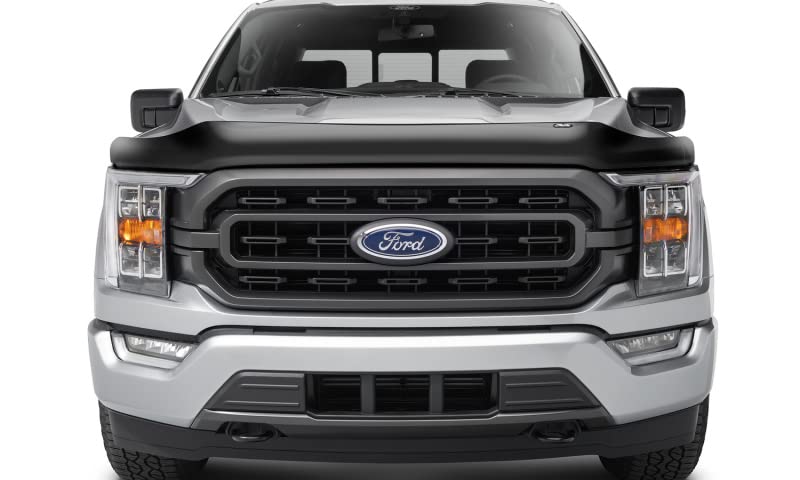
Appearance and Truck Styling
Aeroskin Aesthetic
The Aeroskin disappears into the hood line when viewed from most angles. It’s dark smoke acrylic with a matte finish that blends into dark paint especially well, and even on lighter colors it reads more like a subtle accent than an add-on. If you want hood protection without announcing it, this is the cleaner look.
Bug Deflector II Aesthetic
The Bug Deflector II makes itself known. The upright design creates a defined shadow line across the hood, and the taller profile changes the truck’s front end silhouette. That’s exactly what some owners want — a rugged, modified appearance that signals the truck sees real use. It pairs well with other external accessories like running boards and fender flares.
For drivers considering whether an AVS hood shield offers a cleaner alternative to taller competitors, our comparison of the Aeroskin against WeatherTech’s stand-up design covers the styling and performance tradeoffs in detail.

Maintenance and Long-Term Care
Both shields require occasional cleaning to remove bug residue and road film, but the process differs slightly. Aeroskin’s flush mount means you can wash it the same way you wash the hood — soap, water, and a soft sponge. The acrylic surface resists staining, and because it sits flat, water doesn’t pool underneath.
Bug Deflector II’s upright design creates a small gap between the shield and the hood. That space can trap dirt and moisture if you never lift the shield to wipe the underside. We recommend popping the shield forward every few washes to clean the contact area and check the adhesive bond.
Neither shield requires waxing or polishing, but a quick wipe-down after any serious bug splatter keeps both looking sharp. UV exposure affects all plastics over time, but our acrylic formulation holds color well even after years of sun.
Choosing the Right Shield for Your Truck
Your decision between Aeroskin and Bug Deflector II comes down to how you drive and what look you’re after. If you want maximum hood coverage, a clean low-profile appearance, and minimal installation time, Aeroskin delivers all three. If you prefer a bold stand-up design that pushes bugs higher off the windshield and signals a rugged build, Bug Deflector II fits that role.
Both shields protect your paint, install without drilling, and hold up through years of highway and trail use. We build them to the same durability standard — the difference is aesthetic and functional preference, not quality. Pick the one that matches how your truck gets used, and you’ll have solid protection from day one.
Common Questions About Aeroskin and Bug Deflector II
Both shields block bugs effectively, but they do it differently. Bug Deflector II’s taller profile deflects insects higher over the windshield, which means fewer impacts on the glass. Aeroskin catches bugs closer to the hood surface, preventing paint chips but allowing some splatter to reach the windshield at highway speed.
If you drive interstates during heavy bug season, Bug Deflector II keeps your windshield cleaner. If paint protection is the priority and you don’t mind occasional windshield splatter, Aeroskin delivers wider hood coverage.
Both are straightforward DIY installs that most truck owners complete in under thirty minutes. Aeroskin requires only a clean hood surface and firm pressure to bond the adhesive tape. Bug Deflector II adds a few alignment steps if your vehicle uses clips, but the instructions walk you through each mounting point.
No special tools, no drilling, and no permanent modifications. If you can follow a diagram and apply even pressure, you can install either shield at home.
Off-road use favors the Aeroskin’s wider coverage and lower profile. The flush mount reduces the chance of catching branches or brush, and the extended wraparound design protects more of the hood from trail debris kicked up at odd angles.
Bug Deflector II’s upright stance can snag on vegetation in tight trails, and its narrower footprint leaves the hood edges more exposed to side impacts from rocks and gravel. If you leave pavement regularly, Aeroskin handles the unpredictable stuff better.
Aeroskin’s low profile creates minimal aerodynamic drag, and most drivers report no measurable change in fuel economy. The flush design doesn’t disrupt airflow the way a taller accessory might.
Bug Deflector II’s upright stance does introduce some drag, but the effect is minor — typically less than a few tenths of a mile per gallon on highway runs. You’d need sensitive instrumentation to detect the difference, and real-world driving conditions create bigger swings than the shield’s presence.
AVS hood shields are vehicle-specific, meaning each one is molded to fit a particular make, model, and year range. If your next truck falls within the same application, you can transfer the shield by carefully removing the adhesive and applying fresh tape. If you switch to a different vehicle, you’ll need a new shield cut for that application.
We design each shield to match factory hood contours exactly, which is why one Aeroskin for a Ford won’t fit a Chevy. That precision fit is also why the installation looks factory and the protection works as intended.
Aeroskin’s flush mount typically reduces wind noise slightly because it smooths the transition from hood to windshield, eliminating the sharp edge where turbulence forms. The effect is subtle, but drivers with particularly loud wind rush at highway speed sometimes notice a quieter cabin after installation.
Bug Deflector II can increase wind noise on some vehicles because the upright profile creates a new surface for air to hit. The noise is usually a soft whoosh rather than a harsh whistle, and many owners don’t mind it as part of the truck’s character. If silence is your goal, Aeroskin is the better pick.