


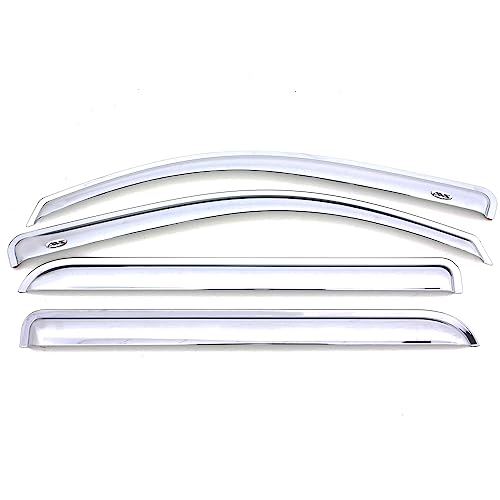
AVS Chrome Bug Deflector
Our Chrome Bug Deflector combines impact-resistant acrylic construction with a high-gloss chrome-plated finish that delivers both protection and show-quality style. This hood shield mounts directly to your vehicle's contour using a no-drill installation system that secures with OE-grade automotive tape and integrated mounting brackets.
The deflector redirects insects, road debris, and gravel away from your hood and windshield while the mirror-finish chrome surface complements factory trim and aftermarket accessories. We engineer each deflector to match your specific year, make, and model for precise fitment without gaps or overhang.
Chrome finish & mounting specs
Chrome Plating & Finish Quality
We apply a triple-layer chrome plating process over high-impact acrylic to create the mirror finish that defines this deflector. The base layer bonds chrome particles directly to the acrylic substrate, followed by a reflective mid-coat that produces the signature shine, then sealed with a clear UV-protective topcoat.
This layered approach prevents the hazing and yellowing common in vacuum-metallized plastics. The chrome surface maintains its reflective depth through temperature swings from –40°F to 160°F without cracking or peeling. Our quality control inspects every deflector under calibrated lighting to verify uniform reflectivity across the entire surface before packaging.
Vehicle-Specific Fitment
Template Engineering
Each AVS chrome bug deflector begins with laser-scanned measurements of the factory hood profile for your specific year, make, and model. We map the curvature, rain channels, and hood seams to create a CAD template that accounts for variations between trim levels and production years.
The deflector wraps the leading edge of your hood with a 2.5-inch profile that follows factory body lines without interfering with hood latches, washer nozzles, or under-hood clearance. Mounting brackets position the shield to maintain a 3-8mm gap above the hood surface for airflow while preventing flex at highway speeds.
No-Drill Mounting System
The installation requires no drilling, cutting, or permanent modifications to your vehicle. We pre-install 3M VHB tape sections on the deflector’s mounting flanges — the same adhesive OEMs use for body cladding and trim.
Before mounting, you’ll clean the hood surface with the included isopropyl prep pad to remove wax, silicone, and contaminants that compromise tape bond strength. The deflector clips into position using alignment tabs that reference factory hood seams, then you apply firm pressure along each mounting flange for 30 seconds to activate the adhesive.
More AVS Chrome Hood Protection




Rated 4.8 by verified buyers
AVS Chrome Bug Deflector Questions
We manufacture vehicle-specific deflectors engineered from factory hood measurements for precise fitment. Each deflector listing includes a year/make/model compatibility chart. Enter your vehicle information during checkout to verify fitment, or contact our fitment specialists with your VIN for confirmation.
Deflectors are designed to account for mid-year production changes and trim-level variations. If your vehicle has aftermarket hood modifications, custom grilles, or non-OEM body work, contact us before ordering to verify compatibility.
The triple-layer chrome plating process creates a more durable finish than single-stage vacuum metallization. The UV-protective topcoat prevents the yellowing and hazing that affects cheaper chrome-look plastics over time.
Chrome finish is more scratch-visible than matte or smoked surfaces, so we recommend hand washing rather than automatic brushes. The reflective quality stays intact through normal weather exposure, but direct impact from large road debris can chip through to the acrylic core like any exterior accessory.
Yes, the no-drill system is designed for DIY installation in 20-30 minutes using basic hand tools. The kit includes pre-applied 3M tape, all mounting hardware, alcohol prep pads, and vehicle-specific instructions with diagrams.
The most important step is surface preparation — thoroughly cleaning the hood with the provided prep pad and allowing it to dry completely before mounting. Install in temperatures above 60°F for optimal tape bond strength, and avoid washing the vehicle for 72 hours after installation to allow full adhesive cure.
Independent testing shows negligible fuel economy impact — typically less than 0.1 MPG difference at highway speeds. The deflector's aerodynamic profile follows hood contours to minimize drag.
Wind noise is rare and usually indicates improper installation or a fitment gap. The deflector should maintain a 3-8mm gap above the hood surface without touching. If you hear whistling at highway speeds, check that all mounting brackets are fully seated and the deflector isn't flexing due to loose hardware.
The standard chrome bug deflector features a traditional high-profile design with full wraparound coverage and visible mounting brackets. The chrome Aeroskin bug deflector uses a lower-profile aerodynamic shape with integrated air channels and flush-mount hardware for a more subtle appearance.
Both offer identical chrome finish quality and impact protection. The Aeroskin sits closer to the hood with less vertical rise, while the standard model extends higher for maximum debris deflection. Choose based on your preferred aesthetic and the hood angle of your specific vehicle.
Warm the mounting tape with a heat gun or hair dryer set to medium heat for 30-60 seconds to soften the adhesive. Gently pry up one corner of the deflector using a plastic trim tool, then slowly peel back while continuing to apply heat.
Remove residual tape from the hood using adhesive remover or isopropyl alcohol and a plastic scraper — avoid metal tools that can scratch paint. The removal process does not damage factory paint or leave permanent marks when done carefully. The deflector cannot be reinstalled after removal since the tape loses bond strength once separated.
Most modern vehicles with forward-facing cameras, radar sensors, or adaptive cruise control systems position these components behind the grille or in the windshield, not on the hood surface. Our deflectors mount to the hood's leading edge and do not obstruct sensors.
If your vehicle has a hood-mounted camera for 360-degree view systems, verify its location before ordering. Some Toyota, Nissan, and Ram models place cameras near the hood's center front. Contact our fitment team with your VIN and we'll confirm whether the deflector interferes with your specific sensor configuration.